

Can Rosemary Oil Regrow Thinning Edges?

Can Rosemary Oil Regrow Thinning Edges?
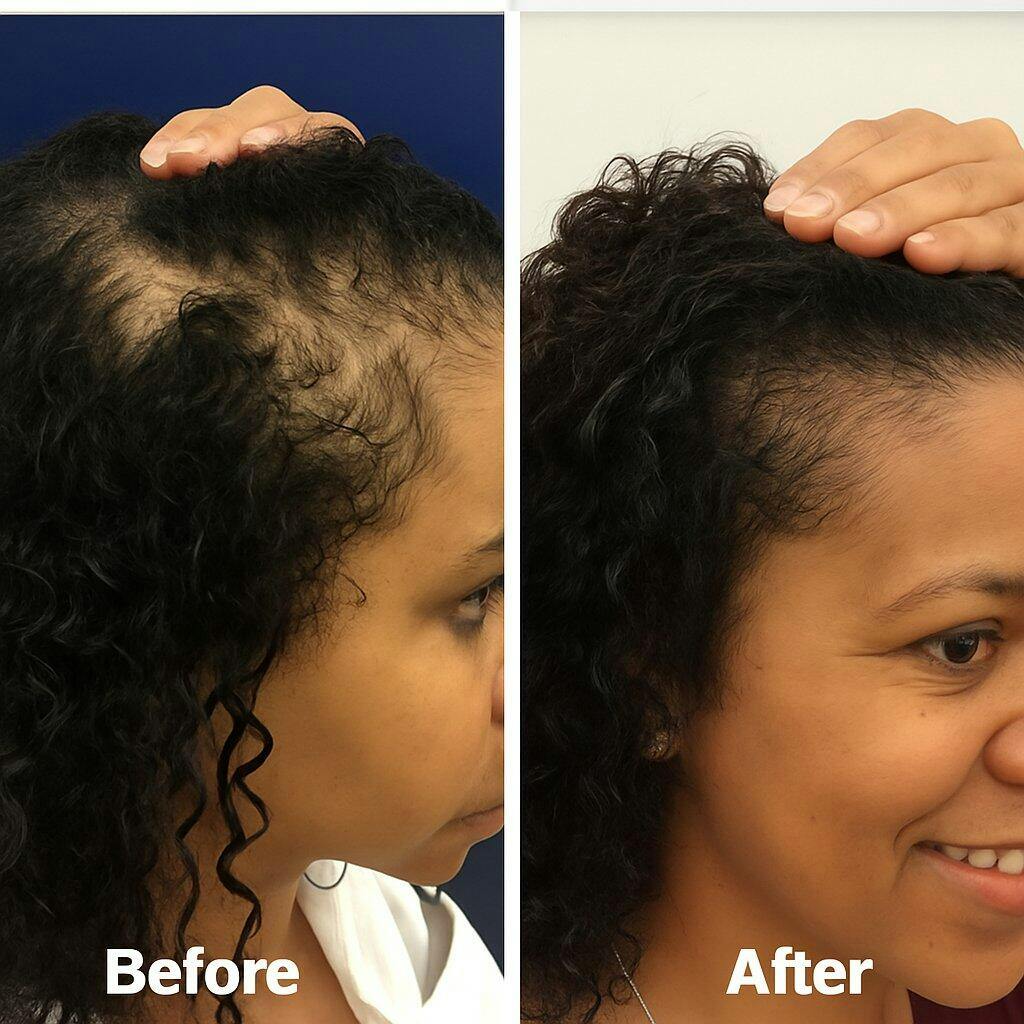
Rosemary oil may help thinning edges regrow by improving scalp circulation and supporting healthier hair follicles. However, results depend on whether follicles are still active. When follicles are damaged but not destroyed, improving scalp conditions can support regrowth. Understanding the cause of thinning edges is the key to restoring hair growth.
Who This Article Is For
This guide is for people who:
- notice thinning or sparse hair around the hairline
- struggle with slow edge regrowth
- experience breakage from styling or tension
- want natural methods to support edge regrowth
- want science-based information rather than marketing claims
Thinning edges—often called “edge loss”—are one of the most common hair concerns, particularly for people who frequently wear protective or tight hairstyles.
Many people turn to rosemary oil as a natural solution, but understanding why edges thin and how follicles respond to treatment is essential before expecting regrowth.
Learn more: How to Grow Thinning Edges Naturally
Why Edges Become Thin
The hairline area is particularly delicate because the follicles in this region are smaller and more sensitive to stress.
Several factors can cause thinning edges.
1. Traction Alopecia
Traction alopecia occurs when hair follicles are repeatedly stressed by tension.
Common causes include:
- tight braids
- ponytails
- wigs or extensions
- glued hairstyles
Over time, continuous tension weakens follicles and can cause hair loss along the hairline.
When detected early, traction alopecia is often reversible.
2. Breakage Along the Hairline
Edges are more fragile than other areas of the scalp.
Frequent styling, heat, or dryness may cause hair to break near the hairline.
Breakage can create the appearance of thinning even when follicles remain active.
3. Scalp Inflammation
Inflammation around the hair follicle can disrupt healthy hair growth cycles.
This may result from:
- harsh hair products
- scalp irritation
- buildup or dandruff
Reducing inflammation helps restore a healthier scalp environment.
4. Hormonal Changes
Hormonal fluctuations may also affect the hairline.
Conditions such as postpartum hair shedding or hormonal imbalances can lead to temporary thinning edges.
In many cases, follicles resume normal growth once hormone levels stabilize.

How Hair Grows at the Hairline
Hair grows from follicles beneath the scalp through a repeating biological cycle.
Growth Phase (Anagen)
During this stage, follicles actively produce hair.
This phase can last several years.
Transition Phase (Catagen)
Hair growth slows while follicles prepare to rest.
Resting Phase (Telogen)
Hair temporarily stops growing before shedding.
A new strand eventually begins forming.
Hairline follicles can remain in the resting phase longer if they experience stress or inflammation.
Supporting scalp health helps return follicles to the growth phase.

How Rosemary Oil May Help Thinning Edges
Rosemary oil has been widely studied for its potential role in supporting hair growth.
Its effects are believed to come from several biological mechanisms.
Improved Scalp Circulation
Hair follicles rely on oxygen and nutrients delivered through blood flow.
Rosemary oil may stimulate circulation in the scalp.
Improved circulation may help deliver nutrients to follicles and support healthier growth cycles.
Anti-Inflammatory Properties
Chronic inflammation around hair follicles can disrupt growth.
Rosemary contains compounds such as carnosic acid, which may help reduce oxidative stress.
Follicle Support
Some research suggests rosemary may influence dermal papilla cells, which regulate hair growth.
Supporting these cells may help follicles remain active longer.
The 2015 Rosemary Oil Hair Growth Study
One of the most cited clinical studies compared rosemary oil with 2% minoxidil, a common hair loss treatment.
Participants with androgenetic alopecia used either rosemary oil or minoxidil.
After six months, both groups experienced similar improvements in hair count.
Participants using rosemary oil reported less scalp irritation.
Learn more: The Science Behind Rosemary Oil for Hair Growth
When Rosemary Oil Can Help Regrow Edges
Rosemary oil may support regrowth when follicles are:
- stressed but still alive
- weakened by inflammation
- affected by reduced circulation
- temporarily inactive
In these cases, improving scalp conditions may allow follicles to resume hair production.
When Rosemary Oil Cannot Regrow Edges
Rosemary oil cannot restore hair growth if follicles have been permanently destroyed.
This may occur in cases of:
- long-term traction alopecia
- scarring alopecia
- severe follicle damage
Once follicles disappear, no topical treatment can recreate them.
Understanding this limitation helps set realistic expectations.
Learn more: The Best Hair Growth Oil for Thinning Edges, Breakage & Faster Regrowth
How to Use Rosemary Oil for Thinning Edges
For best results, rosemary oil should be used consistently and applied correctly.
Step 1: Dilute the Oil
Pure essential oils should be diluted with a carrier oil.
Common carrier oils include:
- castor oil
- jojoba oil
- coconut oil
A common mixture is 3–5 drops rosemary oil per tablespoon of carrier oil.
Step 2: Apply to the Hairline
Use a dropper or fingertips to apply oil directly to thinning areas.
Focus on the scalp rather than the hair strands.
Step 3: Massage the Edges
Massage gently for 2–3 minutes.
Massage may help improve circulation and distribute the oil evenly.
Step 4: Repeat Consistently
Most routines apply rosemary oil three to four times per week.
Consistency is important because hair growth cycles are slow.
How Long Does Edge Regrowth Take?
Hair growth around the hairline occurs gradually.
Typical timelines may include:
|
Time Frame |
Possible Changes |
|
4–6 weeks |
improved scalp condition |
|
2–3 months |
reduced shedding |
|
3–4 months |
early regrowth |
|
6 months |
improved density |
Individual results vary depending on the health of the follicles.
Supporting Edge Regrowth Beyond Oils
Rosemary oil works best when combined with healthy hair care habits.
Reduce Tension on the Hairline
Avoid tight hairstyles that place stress on edges.
Maintain Moisture
Dry hair breaks easily.
Regular moisturizing treatments help protect fragile edge hairs.
Limit Heat Styling
Heat tools may weaken hair strands and increase breakage.
Support Overall Health
Balanced nutrition and stress management support healthy hair growth cycles.
Common Mistakes That Slow Edge Regrowth
Tight Hairstyles
Repeated tension may prevent follicles from recovering.
Excessive Product Buildup
Heavy products may clog follicles and disrupt scalp balance.
Overuse of Oils
Applying too much oil can create buildup around follicles.
Expecting Immediate Results
Hair growth requires patience and consistency.

Frequently Asked Questions
Can rosemary oil regrow edges completely?
It may help when follicles are still active but cannot restore hair if follicles are permanently damaged.
How often should rosemary oil be applied to edges?
Most routines recommend applying oil three to four times per week.
How long does edge regrowth take?
Many people begin noticing improvements within three to six months.
Can traction alopecia be reversed?
Early traction alopecia is often reversible if tension on the hairline is reduced.
Do oils alone regrow hair?
Oils help support scalp health but work best when combined with good hair care practices.
Final Thoughts
Thinning edges can be frustrating, but in many cases the underlying cause is reversible.
Rosemary oil has gained attention because research suggests it may help improve scalp circulation, reduce inflammation, and support healthier follicle activity.
When follicles remain active, improving scalp conditions may allow hair to regrow over time.
However, long-term edge loss caused by severe follicle damage may require medical treatment.
Understanding the cause of thinning edges—and building a consistent scalp care routine—offers the best chance for restoring stronger, healthier hair growth along the hairline.